
 All vikis
 007 First Light
 AI
 Aion 2
 Ananta
 ARC Raiders
 ArcheAge Chronicles
 Call of Duty: Modern Warfare 4
 ChatGPT
 Chrono Odyssey
 Civilization 3
 Civilization 4
 Crimson Desert
 Deadlock
 Diablo 4
 Diablo 5
 Enshrouded
 Fable
 Final Fantasy Resonance
 Football Manager 27
 Forza Horizon 6
 God of War
 Grand Theft Auto 6
 Heroes of Might and Magic 3
Claude Code
Claude Code is Anthropic's agentic coding tool. It reads a codebase, edits files, runs commands and opens pull requests from the terminal, VS Code, JetBrains IDEs, the Claude desktop app, the browser and Slack, and it comes with every paid Claude plan or a pay-as-you-go Console account.
Claude Code is Anthropic's agentic coding tool. It reads your codebase, edits files, runs commands and works with your development tools, and it runs in the terminal, in VS Code and JetBrains IDEs, in the Claude desktop app and in the browser at claude.ai/code (Overview). The free plan does not include it. It comes with every paid Claude plan from Claude Pro at $20 a month, or a Claude Console account billed per token, and the terminal version also runs on Amazon Bedrock, Google Cloud and Microsoft Foundry. You describe a task in plain language ("fix the failing login test", "add pagination to the orders API"). Claude Code then gathers context from the files, makes the change, runs the tests and reports back, asking permission before risky steps unless you let it work on its own. Anthropic released it as a research preview on Feb 24, 2025 and made it generally available on May 22, 2025. On Nov 6, 2026 the latest version was 2.1.318, released Nov 4, 2026.
Learn more: Claude Code on ai.vi.ki
Quick facts
| Maker | Anthropic |
| What it is | An agentic coding tool for the terminal, IDEs, desktop, web and Slack |
| First release | Research preview, Feb 24, 2025; generally available May 22, 2025 |
| Latest version | 2.1.318, Nov 4, 2026 (as of Nov 6, 2026) |
| Install (macOS, Linux, WSL) | curl -fsSL https://claude.ai/install.sh | bash |
| Install (Windows PowerShell) | irm https://claude.ai/install.ps1 | iex |
| Included in | Pro, Max, Ultra, Team and Enterprise; not Free (as of Nov 6, 2026) |
| Cheapest plan with it | Pro, $20 a month or $17 a month billed annually (as of Nov 6, 2026) |
| Pay per use | A Console account at API token rates |
| Default model | Claude Opus 5.5 on every Anthropic plan (as of Nov 6, 2026) |
| Systems | macOS 13+, Windows 10 1809+, Ubuntu 20.04+, Debian 10+, Alpine 3.19+; 4 GB of memory |
| Documentation | code.claude.com/docs |
Sources: Overview, Advanced setup, Model configuration, Pricing, Releases, read Nov 6, 2026.
What can Claude Code do?
Claude Code works on a whole repository rather than a single file. Anthropic's overview lists the jobs it is built for: writing and fixing tests, lint fixes, merge conflicts, dependency updates and release notes; building features and fixing bugs from a plain description; creating commits and pull requests; connecting outside tools through the Model Context Protocol; running several agents in parallel; and scripting it from the shell (Overview). Because it is a command-line program, its output can be piped like any other: git diff main --name-only | claude -p "review these changed files for security issues" is one of the overview's own examples.
It also reviews code. The bundled /code-review command checks the current diff or a pull request for bugs and can apply the fixes; Code Review for GitHub, a managed service in which several agents comment on every pull request, became generally available for Team and Enterprise plans on Oct 15, 2026. Beyond code, it can drive a browser through Claude in Chrome, operate desktop apps with computer use, publish Artifacts, and start designs and decks with /design and /slides (Commands).
Where does Claude Code run?
Every surface runs the same engine, so a repository's CLAUDE.md files, settings and MCP servers work in all of them (Overview).
| Surface | What it is | Page |
|---|---|---|
| Terminal | The full command-line program, claude |
How to Install Claude Code |
| VS Code (and Cursor, Kiro) | A graphical extension with inline diffs | Claude Code in VS Code and JetBrains |
| JetBrains IDEs | A plugin that connects the CLI to the IDE | Claude Code in VS Code and JetBrains |
| Desktop app | The Code tab of the Claude desktop app | Claude Code Desktop |
| Web and mobile | Cloud sessions at claude.ai/code and in the Claude app | Claude Code on the Web |
| Slack | Mention @Claude with a coding task | Claude Tag |
| CI | GitHub Actions, GitLab, headless scripts | Claude Code GitHub Actions, Claude Code Headless and CI |
Source: Overview, Claude Code in Slack, read Nov 6, 2026.
Sessions move between surfaces. /desktop hands a terminal session to the desktop app, claude --teleport pulls a cloud session into the terminal, and Remote Control lets the phone app or claude.ai steer a session that keeps running on your own computer (Remote Control). There is no separate Claude Code phone app: the Code tab in the Claude app is a window onto sessions that run elsewhere (Claude Code on mobile).
How much does Claude Code cost?
Claude Code has no price of its own. On a subscription it shares one pool of usage with Claude chat, so terminal work and conversations draw on the same five-hour and weekly limits (Pricing). As of Nov 6, 2026:
| Plan | Price | Claude Code usage |
|---|---|---|
| Free | $0 | Not included |
| Pro | $20 a month, $17 a month billed annually | Base limits (1x) |
| Max | $100 a month | 5x Pro every five hours and every week |
| Ultra | $200 a month | No five-hour limit for verified accounts, 10x Pro weekly |
| Team | $20 a seat billed annually ($25 monthly); Premium seat $100 ($125) | Standard or 5x usage per seat |
| Enterprise | $20 a seat a month, 20-seat minimum, plus usage at API rates | Billed by use |
| Console (API) | Per token | Billed by use |
Source: Pricing, read Nov 6, 2026.
On API billing, Anthropic says enterprise deployments average about $13 per developer per active day and $150 to $250 a month, under $30 a day for 90% of users. The full breakdown, including fast mode and Code Review costs, is on Claude Code Pricing, and the limits themselves on Claude Usage Limits.
Which models does Claude Code use?
Claude Code defaults to Claude Opus 5.5 (claude-opus-5-5) on Pro, Max, Ultra, Team, Enterprise and the Anthropic API, at medium effort (Model configuration). /model switches to Claude Sonnet 5.5, Claude Haiku 5.5 or Claude Fable 5.1, which Anthropic calls the most capable model in Claude Code but which is the default on no plan and draws on usage credits on Pro. /effort sets how hard the model thinks, from low to max, and typing ultrathink in a prompt raises a single turn. Fast mode (/fast) runs Opus 5.5 up to 2.5 times faster at twice the token price. All current models have a 1M-token context window in Claude Code. More on Claude Models, Claude Context Window and Extended and Adaptive Thinking.
How Claude Code works
Anthropic describes Claude Code as the "agentic harness" around the model: the tools and context management that let it act (How Claude Code works). Each task runs a loop of gathering context, taking action and checking the result, and you can interrupt it with Esc at any point. Its built-in tools read, write and search files, run shell commands (Bash, or PowerShell on Windows), fetch web pages, start subagents and keep a task list (Tools reference).
How much it may do without asking is set by its permission mode, which Shift+Tab cycles: Manual asks before edits and commands, Accept edits approves file changes, Plan only reads and proposes, and Auto lets a background classifier approve safe actions. Auto has been the starting mode for new terminal and VS Code sessions since version 2.1.283 (Sep 25, 2026). The modes and allow and deny rules are covered on Claude Code Permissions and Modes. Every prompt also creates a checkpoint, so Esc twice rewinds both code and conversation (Claude Code Checkpoints).
Customizing Claude Code
- CLAUDE.md: a Markdown file of project instructions loaded at the start of every session;
/initwrites a first one. Claude Code also keeps its own auto memory of what it learns. - Skills: folders with a
SKILL.mdthat teach Claude a procedure; your own slash commands are skills (Claude Code Slash Commands, How to Build a Claude Skill). - Hooks: shell commands that run at fixed points, such as before a tool call or after an edit, to enforce rules the model cannot skip.
- Subagents: helpers with their own context window and tools, for research or parallel work.
- MCP servers: connections to databases, issue trackers, design tools and other services.
- Plugins: bundles of the above, installed from marketplaces with
/plugin; mods, plugins that change Claude Code's own interface, arrived on Oct 1, 2026. - Settings:
settings.jsonfiles at user, project and organization level.
Keyboard shortcuts and the ~/.claude/keybindings.json file are on Claude Code Keyboard Shortcuts, and Anthropic's own advice on working with it on Claude Code Best Practices.
Automation and the Agent SDK
claude -p "prompt" runs a task without the interactive screen, for scripts and CI pipelines (Claude Code Headless and CI). The Claude GitHub App and anthropics/claude-code-action let anyone mention @claude in a pull request or issue to have it implement changes (Claude Code GitHub Actions). Cloud scheduled tasks run a saved prompt on a schedule, an API call or a GitHub event, on Pro and higher plans (Scheduled tasks). The Claude Agent SDK packages the same agent loop as a Python and TypeScript library for building other agents.
Privacy and security
In the terminal, Claude Code runs on your computer and sends prompts and the code it reads to Anthropic's API; it needs no separate server or remote code index (Claude Code product page). Whether that code trains future models follows the account: Free, Pro, Max and Ultra users choose in their privacy settings, while Anthropic does not train on code sent under commercial terms (Team, Enterprise, API) unless the customer opts in (Data usage). Local transcripts sit in plain text under ~/.claude/projects/ for 30 days by default. Anthropic's security page is blunt that you are responsible for reviewing what Claude proposes before approving it, and that sandboxing is not available on native Windows (Security, Advanced setup). More on Claude Privacy and Data Use.
History
- Feb 24, 2025: announced with Claude 3.7 Sonnet as a limited research preview for the terminal (Anthropic).
- May 22, 2025: generally available with Claude Opus 4 and Sonnet 4, version 1.0.0, with beta VS Code and JetBrains extensions and the Claude Code SDK (Anthropic).
- Sep 29, 2025: version 2.0 with a native VS Code extension, checkpoints and
/rewind; the SDK became the Claude Agent SDK (Anthropic). - Oct 9, 2025: plugins (Anthropic).
- Oct 20, 2025: Claude Code on the web, in beta (Anthropic).
- Mar 23 to Apr 3, 2026: auto mode in research preview, computer use in the desktop app and the CLI, a native PowerShell tool (What's new).
- May 6, 2026: Anthropic doubled Claude Code's five-hour limits for Pro, Max, Team and seat-based Enterprise (Anthropic).
- Jun 30, 2026: Claude in Chrome generally available on all direct plans; desktop app beta for Linux (What's new).
- Sep 22, 2026: Claude Opus 5.5 became the default model (Changelog).
- Sep 23, 2026: cloud sessions, the former Claude Code on the web, generally available (Anthropic).
- Oct 1, 2026: mods; Oct 15, 2026: Code Review generally available for Team and Enterprise (Claude Code product page).
Every release is listed on Claude Release Notes.
Adoption
Anthropic's own figures: Claude Code reached $500 million in run-rate revenue by Sep 2, 2025, $1 billion about six months after general availability, and over $2.5 billion by Feb 12, 2026, when Anthropic also cited an outside estimate that 4% of public GitHub commits were written by Claude Code. Anthropic published no later Claude Code revenue figure and no user count as of Nov 6, 2026. Independently, in the 2026 Stack Overflow survey, 65.5% of the 12,255 developers who answered the coding agents question had used Claude Code in the past year, ahead of GitHub Copilot at 58.7%; respondents could pick several tools, so this measures reach, not preference. On the public Terminal-Bench 4.0 leaderboard, Claude Code with Opus 5.5 held first place at 64.85% on Nov 6, 2026, though its run cost about seven times as much as the best Codex entry, which scored 58.18%.
Alternatives
Claude Code's closest rivals are OpenAI's Codex, Cursor, GitHub Copilot and Google's Gemini CLI. Codex and Gemini CLI publish their command-line tools as open source under the Apache 2.0 license, and Codex is included in ChatGPT's free and $8 Go tiers, while Claude Code needs a paid plan or API credit (openai/codex, gemini-cli; Claude Code vs Codex, Claude Code vs Gemini CLI). Cursor is an editor built around AI with its own agent (Claude Code vs Cursor), and Copilot is built into GitHub (Claude Code vs GitHub Copilot).
Learn more: Codex on chatgpt.vi.ki, Cursor on ai.vi.ki, GitHub Copilot on ai.vi.ki, Gemini CLI on ai.vi.ki
Frequently asked questions
Is Claude Code free? No. The free Claude plan does not include Claude Code; it needs Pro ($20 a month), Max, Ultra, Team, Enterprise or a pay-as-you-go Console account, as of Nov 6, 2026.
Is Claude Code included in Claude Pro? Yes. Claude Pro includes Claude Code, and its use shares the same five-hour and weekly limits as Claude chat.
What languages does Claude Code work with? Claude Code is not tied to a language: it reads and edits any text file and runs whatever build and test commands the project uses, so it works with Python, JavaScript, Go, Rust, Java and the rest.
Does Claude Code work on Windows? Yes. Claude Code runs natively on Windows 10 version 1809 or later and Windows Server 2019 or later, with or without Git for Windows, or inside WSL; sandboxing needs WSL 2.
What model does Claude Code use? Claude Code uses Claude Opus 5.5 by default on every Anthropic plan as of Nov 6, 2026, and /model switches to Sonnet 5.5, Haiku 5.5 or Fable 5.1.
Does Claude Code send my code to Anthropic? Yes. Claude Code sends your prompts and the files it reads to Anthropic's API to be processed by Claude; it does not upload the whole repository or build a remote index, and commercial accounts' code is not used for training.
Who made Claude Code? Anthropic made Claude Code; Anthropic's May 12, 2026 conference post names Boris Cherny as its creator.
Sources
- Claude Code overview, Claude Code Docs, read Nov 6, 2026
- Advanced setup, Claude Code Docs, read Nov 6, 2026
- How Claude Code works, Claude Code Docs, read Nov 6, 2026
- Tools reference, Claude Code Docs, read Nov 6, 2026
- Model configuration, Claude Code Docs, read Nov 6, 2026
- Speed up responses with fast mode, Claude Code Docs, read Nov 6, 2026
- Choose a permission mode, Claude Code Docs, read Nov 6, 2026
- Commands, Claude Code Docs, read Nov 6, 2026
- Manage costs effectively, Claude Code Docs, read Nov 6, 2026
- Automate work with scheduled tasks, Claude Code Docs, read Nov 6, 2026
- Remote Control, Claude Code Docs, read Nov 6, 2026
- Claude Code on mobile, Claude Code Docs, read Nov 6, 2026
- Claude Code in Slack, Claude Code Docs, read Nov 6, 2026
- Data usage, Claude Code Docs, read Nov 6, 2026
- Security, Claude Code Docs, read Nov 6, 2026
- What's new, Claude Code Docs, read Nov 6, 2026
- Claude Code changelog, Claude Code Docs, read Nov 6, 2026
- Releases, anthropics/claude-code on GitHub, read Nov 6, 2026
- Plans and pricing, Claude, read Nov 6, 2026
- Claude Code, Claude, read Nov 6, 2026
- Claude 3.7 Sonnet and Claude Code, Anthropic, Feb 24, 2025
- Introducing Claude 4, Anthropic, May 22, 2025
- Anthropic raises Series F, Anthropic, Sep 2, 2025
- Enabling Claude Code to work more autonomously, Anthropic, Sep 29, 2025
- Customize Claude Code with plugins, Anthropic, Oct 9, 2025
- Claude Code on the web, Anthropic, Oct 20, 2025, updated Sep 23, 2026
- Anthropic acquires Bun as Claude Code reaches $1B milestone, Anthropic, Dec 3, 2025
- Anthropic raises $30B Series G, Anthropic, Feb 12, 2026
- Higher usage limits and a SpaceX compute deal, Anthropic, May 6, 2026
- Code w/ Claude SF 2026, Claude, May 12, 2026
- openai/codex, OpenAI on GitHub, read Nov 6, 2026
- gemini-cli, Google on GitHub, read Nov 6, 2026
- Terminal-Bench 4.0 leaderboard, tbench.ai, read Nov 6, 2026
- 2026 Developer Survey: AI, Stack Overflow, read Nov 6, 2026
- What is Claude Code?, Claude, May 5, 2026 (video)
- Introducing Claude Code, Anthropic, Feb 24, 2025 (video)
- How Claude Code Works, Claude, May 14, 2026 (video)
- Coding on the go with Claude Code, Claude, Oct 13, 2026 (video)
Moments
What is Claude Code?
Claude
Introducing Claude Code
Anthropic
Coding on the go with Claude Code
Claude
How Claude Code Works
Claude
Photos
Claude Code
-
 Claude Agent SDKThe Claude Agent SDK (formerly the Claude Code SDK) is Anthropic's Python and TypeScript library that runs Claude Code's agent loop, tools, hooks, subagents and MCP support inside your own program; install it with pip install claude-agent-sdk or npm install @anthropic-ai/claude-agent-sdk.
-
 Claude Code Best PracticesAnthropic's Claude Code best practices come down to three things: tell Claude what it cannot see in the code, give it a check to run that passes or fails, and enforce rules that cannot have exceptions with hooks and deny rules instead of CLAUDE.md lines.
-
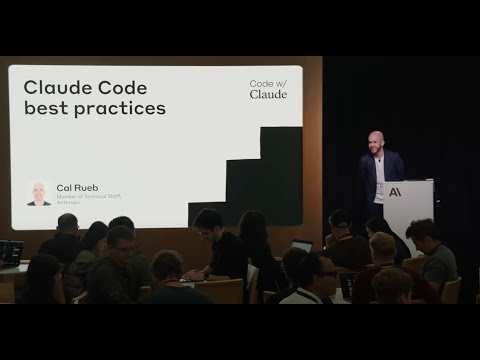 Claude Code CheckpointsClaude Code saves a checkpoint of your files before every prompt, so /rewind or Esc pressed twice can restore the code, the conversation or both to an earlier point. Checkpoints cover Claude's own file edits, not changes made only by shell commands or most subagents, so Git is still needed.
-
 Claude Code DesktopClaude Code Desktop is the Code tab of the Claude desktop app for macOS, Windows and Linux (beta). It runs Claude Code sessions side by side, locally, in the cloud or over SSH, with Git worktrees, a visual diff view, a terminal, a browser preview and computer use, on any paid Claude plan with no separate CLI install.
-
 Claude Code GitHub ActionsClaude Code GitHub Actions (anthropics/claude-code-action@v1) lets you mention @claude in an issue or pull request to have Claude answer, change code and open pull requests; run /install-github-app in Claude Code to set it up.
-
Claude Code Headless and CIclaude -p "prompt" runs Claude Code once without the interactive screen and exits, printing text, JSON or streamed JSON; with --bare, --allowedTools and --permission-mode dontAsk it is how Claude Code runs in CI jobs, scripts and git hooks.
-
 Claude Code HooksClaude Code hooks are shell commands (or HTTP calls, MCP tools or model checks) that Claude Code runs at fixed points such as before a tool call, after an edit or when Claude stops, configured under "hooks" in a settings.json file.
-
-
Claude Code Keyboard ShortcutsClaude Code's main shortcuts are Esc to stop Claude, Esc twice to rewind, Shift+Tab to cycle permission modes, Ctrl+R to search history, Ctrl+O for the transcript, Ctrl+B to background a task and Alt+P (Option+P) to switch model. Shortcuts can be changed in ~/.claude/keybindings.json, opened with /keybindings.
-
 Claude Code MCP ServersClaude Code connects to MCP servers with claude mcp add, for example claude mcp add --transport http notion https://mcp.notion.com/mcp, stored per user, per project in a shared .mcp.json file, or locally for one project.
-
-
 Claude Code Permissions and ModesClaude Code has six permission modes (Manual, Accept edits, Plan, Auto, Don't ask and Bypass permissions), cycled with Shift+Tab; since v2.1.283 interactive sessions start in auto mode, and --dangerously-skip-permissions turns every check off and belongs only in a container or VM.
-
-
Claude Code PricingClaude Code is included in every paid Claude plan, from Pro at $20 a month (or $17 billed annually) to Max at $100 and Ultra at $200, and shares their usage limits; it is not in the free plan. With a Console account it is billed per token at API rates instead, which Anthropic says averages about $13 per developer per active day.
-
 Claude Code SettingsClaude Code reads settings from ~/.claude/settings.json (you), .claude/settings.json (shared project), .claude/settings.local.json (you, one project) and managed policy, with managed settings winning; /config edits them in a session.
-
Claude Code Slash CommandsClaude Code's slash commands are typed at the start of a message, such as /clear, /compact, /model, /init, /rewind and /usage. Anthropic's list had 121 entries on Nov 6, 2026, counting bundled skills and workflows, and your own commands are skills in .claude/skills/ or .claude/commands/.
-
Claude Code SubagentsClaude Code subagents are helper agents that run in their own context window with their own instructions, tools and model; Claude Code ships built-in ones such as Explore and Plan, and you add your own as Markdown files in .claude/agents/.
-
 CLAUDE.md and MemoryCLAUDE.md is a Markdown file of instructions that Claude Code loads at the start of every session, from your user folder (~/.claude/CLAUDE.md), the project (./CLAUDE.md) and a private CLAUDE.local.md; /init writes one. Claude Code also keeps an auto memory of what it learns, indexed in MEMORY.md, and reads AGENTS.md when there is no CLAUDE.md.
-
How to Install Claude CodeInstall Claude Code on macOS, Linux or WSL with `curl -fsSL https://claude.ai/install.sh | bash`, or on Windows PowerShell with `irm https://claude.ai/install.ps1 | iex`, then run `claude` in a project folder and sign in with a paid Claude plan or a Console account.
Related
-
 Anthropic Safety ResearchAnthropic publishes research on how Claude works inside (interpretability), whether it behaves as intended (alignment), model welfare, and misuse, plus a system card and Risk Reports for its models. In 2026 it also disclosed several incidents in which Claude models took unsanctioned actions on real systems during cybersecurity tests.
-
 Anthropic Usage PolicyAnthropic's Usage Policy lists what nobody may use Claude for, such as weapons, malware, child sexual abuse material, fraud, surveillance and election deception, plus extra rules for high-risk uses. The 2026 version takes effect on Nov 12, 2026; violations can be reported to usersafety@anthropic.com.
-
 Claude Privacy and Data UseClaude trains on Free, Pro, Max and Ultra chats only if the "Help improve" setting is on, which users can turn off in Settings > Privacy; with it on, chats may be kept for up to five years, and with it off for 30 days. Team, Enterprise and API data is not used for training by default.
- Claude Release NotesA month-by-month record of what Anthropic shipped for Claude in 2025 and 2026 (models, apps, Claude Code and the API), each entry dated and linked to Anthropic's own announcement. The latest entries are Personal Finance in Claude and new Enterprise security controls on Nov 5, 2026.
- Claude Status and OutagesTo check whether Claude is down, open status.claude.com, Anthropic's official status page, which tracks claude.ai, the Claude Console, the Claude API, Claude Code, Claude Cowork and Claude for Government separately. On Nov 6, 2026 it showed all systems operational.
-
 Claude's ConstitutionClaude's constitution is the public document Anthropic uses to train Claude's values and character; the current text was published on Jan 22, 2026 under a CC0 license. It ranks four priorities (broadly safe, broadly ethical, following Anthropic's guidelines, genuinely helpful) and sets a short list of hard limits no one can unlock.
-
Responsible Scaling PolicyThe Responsible Scaling Policy is Anthropic's voluntary framework for managing catastrophic risks from Claude and later models; version 3.4, effective Jul 8, 2026, is current. It introduced AI Safety Levels, and Anthropic activated ASL-3 protections for Claude Opus 4 on May 22, 2025.
-
 Claude Desktop AppThe Claude desktop app is a free download for macOS and Windows, with Linux in beta, that adds quick entry, desktop extensions, Cowork on your own files, computer use and Claude Code to the Claude chat.
See also
-
-
 Claude ProClaude Pro is Anthropic's $20-a-month plan ($17 a month billed annually) that adds at least five times Free's usage, the Opus models, Claude Code, Research and unlimited projects.
-
-
-
 Model Context ProtocolThe Model Context Protocol (MCP) is an open standard, introduced by Anthropic on Nov 25, 2024, for connecting AI applications such as Claude to outside tools and data through MCP servers. OpenAI, Google and Microsoft support it, and Anthropic donated it to the Linux Foundation's Agentic AI Foundation on Dec 9, 2025.
-